
Represent this organization? Request to claim this listing and suggest verified updates.
All claims require manual verification and approval. No editing access is granted automatically.
War always comes with a price tag. This tracker tries to answer the uncomfortable question politicians rarely highlight: how much is it costing taxpayers right now?
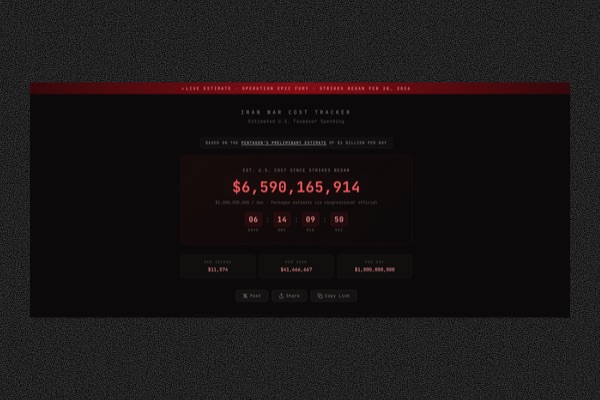
Iran War Cost Tracker is a transparency tool that provides a live estimate of the financial cost of U.S. military operations related to Iran. The website displays a continuously updating counter estimating how much U.S. taxpayer money is being spent as military activity unfolds.
The tracker is based on publicly reported cost estimates from defense officials and analysts. One key estimate referenced by the site suggests U.S. military operations could cost around $1 billion per day, though actual costs may vary depending on the scale of operations, weapons systems used, and deployment logistics.
In addition to the running cost counter, the site explains how modern warfare expenses accumulate quickly. For example, missile defense systems such as THAAD interceptors can cost roughly $12.7 million per missile, while Patriot PAC-3 interceptors cost around $3.7 million each, meaning that defending against cheaper drones or missiles can rapidly escalate costs.
The tracker also compiles estimates from multiple research institutions and policy groups to provide broader economic context. Some economic models suggest the direct budgetary cost of a major Iran conflict could reach tens of billions of dollars, with wider economic impacts potentially reaching much higher depending on how long hostilities continue.
Tools like the Iran War Cost Tracker are part of a growing ecosystem of public transparency dashboards and open-source defense spending trackers that attempt to make complex government expenditures more understandable to the public. By presenting real-time estimates alongside research citations and methodology explanations, the site aims to help journalists, researchers, and citizens understand the financial scale of modern military operations and their impact on public budgets.