
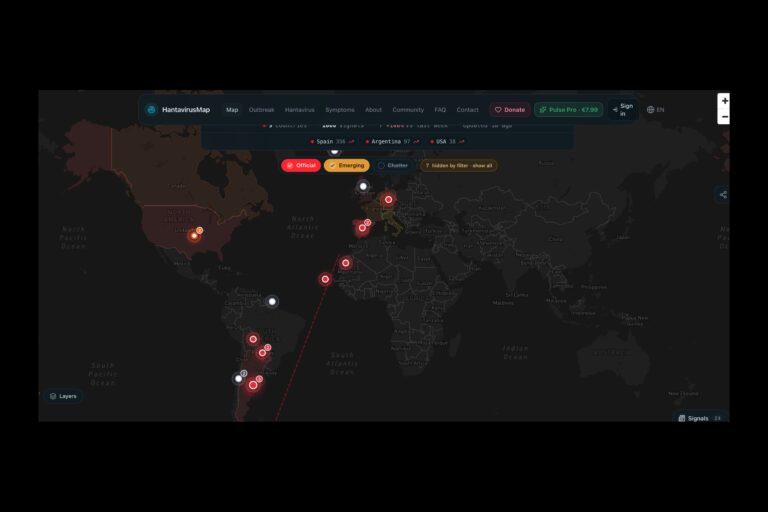
HantavirusMap is a real time global outbreak monitoring platform focused on tracking hantavirus activity, regional outbreaks, public health alerts, and emerging disease signals connected to hantavirus infections worldwide. The platform combines official public health data with curated open source intelligence reporting to create a live interactive monitoring system for researchers, journalists, health professionals, and independent investigators.
The site aggregates information from organizations including the CDC, WHO, ECDC, PAHO, and ProMED alongside verified media reporting and public outbreak alerts. Users can track active outbreak signals, historical case regions, endemic zones, and regional transmission risks through an interactive map interface. The platform also provides educational resources explaining the differences between Hantavirus Pulmonary Syndrome and Hemorrhagic Fever with Renal Syndrome, including geographic distribution, mortality risks, and transmission patterns.
One of the most valuable aspects of HantavirusMap is its emphasis on transparency and signal based outbreak monitoring rather than sensationalized reporting. The site clearly distinguishes between active alerts, endemic regions, historical case data, and imported infections. This makes it useful for researchers and journalists attempting to contextualize disease outbreaks without relying entirely on fragmented social media reports or incomplete news coverage.
The platform has gained additional attention during the 2026 monitoring efforts surrounding the Andes hantavirus outbreak linked to the MV Hondius cruise ship incident, where multiple countries coordinated monitoring and quarantine responses. The site provides continuously updated tracking related to the outbreak, including affected regions, confirmed cases, and international public health responses.
For OSINT researchers, preparedness communities, epidemiology watchers, and independent investigators, HantavirusMap demonstrates how open source intelligence methods and public health surveillance can be combined into accessible real time monitoring infrastructure. The platform is especially useful for tracking emerging infectious disease events, understanding regional disease risks, and preserving outbreak related information in a centralized public database.