
Represent this organization? Request to claim this listing and suggest verified updates.
All claims require manual verification and approval. No editing access is granted automatically.
What It Is
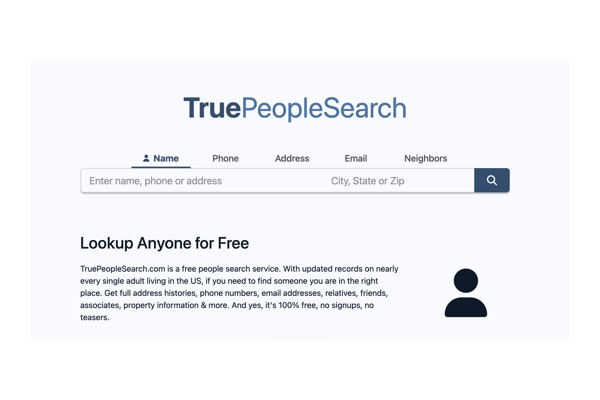
TruePeopleSearch is a free public records search engine that aggregates publicly available data about individuals in the United States. The platform pulls from property records, phone registries, voter files, commercial databases, and other legally obtainable records to create searchable profiles tied to names, phone numbers, and addresses.
In practical terms, it’s one of the fastest ways to identify what information about you — or anyone — is already exposed online. Journalists, investigators, and activists commonly use services like this to confirm identities, trace contact information, locate business owners, or verify whether an address is connected to multiple entities. But it also shows something important: how easily personal data circulates in the modern data-broker ecosystem.
Because the data is aggregated rather than created by the site, TruePeopleSearch acts as a window into the broader surveillance economy. What you see there is not what they collected — it’s what hundreds of companies already share.
What They Offer
• name-based people search
• reverse phone lookup
• address lookup and residence history
• relatives and associates listings
• age and alias identification
• public record aggregation
• potential business and ownership leads
• exposure awareness for personal privacy
Why This Matters
Activists often underestimate how easily they can be located.
Data brokers sell personal records to marketers, private investigators, political campaigns, and sometimes harassment networks. A protest, petition, or public article can unintentionally reveal enough information for someone to identify a home address within minutes.
Learning how a data broker site works is step one in protecting yourself. Sites like this demonstrate the scale of the problem — and why digital hygiene matters. If your phone number, old address, or family members appear in a public profile, that information can be used for intimidation, doxxing, or social engineering attacks.
For researchers and journalists, however, the same tool becomes investigative infrastructure. It can help verify identities, track shell companies tied to residential addresses, and connect individuals to business registrations.
How You Can Use It
Use this safely and intentionally:
-
Search your own name first — always start with self-audit.
-
Screenshot what appears (important before removal).
-
Submit opt-out removal requests for each listing.
-
Check alternate spellings and maiden names.
-
Search your phone number separately.
-
Repeat every few months (records repopulate).
Researchers can also:
– verify sources
– confirm ownership connections
– cross-reference LLC filings
– identify linked contact points
Best For
• activists concerned about doxxing
• journalists
• OSINT researchers
• investigators
• legal researchers
• mutual aid organizers
• whistleblowers
• survivors seeking privacy protection
• everyday citizens checking data exposure