
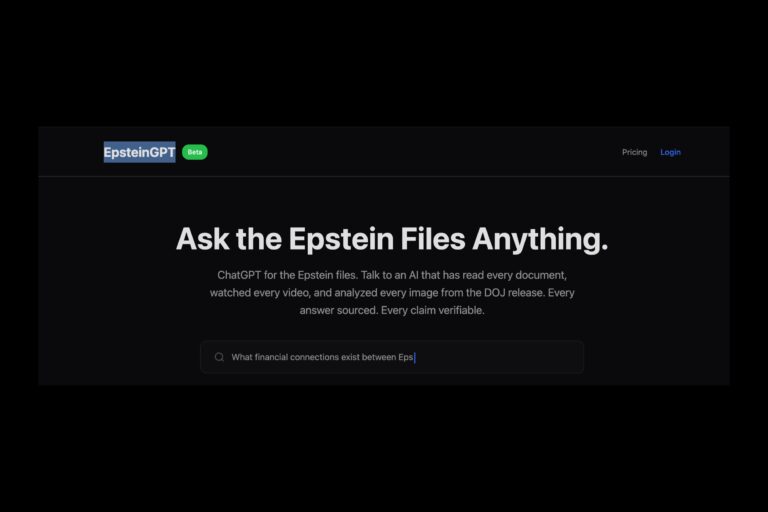
EpsteinGPT is an experimental AI-powered research tool that allows users to search and interact with a large dataset of publicly released documents related to the Jeffrey Epstein case. Built as a conversational interface, the platform connects a language model to thousands of text and image files from the so-called “Epstein files,” enabling users to ask questions and retrieve relevant excerpts quickly.
The tool is designed to simplify access to complex and fragmented document collections by using natural language queries instead of manual searching. Users can explore names, timelines, and document references without needing advanced technical skills or direct familiarity with legal archives.
However, EpsteinGPT should be understood as a research aid rather than a primary source. Like other AI systems, it can produce incomplete, misleading, or incorrect outputs, especially when working with large, partially redacted datasets. The underlying document collection itself may also contain gaps, inconsistencies, or unverified material, meaning results must always be cross-checked against original documents and trusted reporting.
For researchers, journalists, and investigators, EpsteinGPT can serve as a starting point for identifying relevant documents and patterns. It is most effective when used alongside primary sources, verified archives, and structured research platforms, rather than as a standalone authority.