
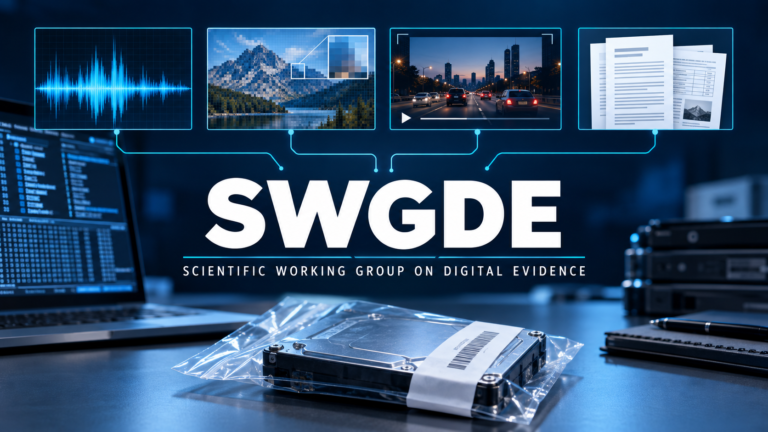
The Scientific Working Group on Digital Evidence, commonly known as SWGDE, develops best practices, guidelines, technical documents, and educational resources for the collection, examination, preservation, and analysis of digital and multimedia evidence. The organization brings together professionals from law enforcement, government agencies, academia, and the private sector who work in digital forensics and related disciplines.
SWGDE is an especially valuable resource for anyone who needs to understand how digital evidence should be handled in a professional investigation. Digital evidence can include computers, mobile devices, photographs, videos, audio recordings, social media content, cloud data, electronic communications, surveillance footage, and other electronically stored information. Improper collection or handling can damage evidence, alter metadata, create questions about authenticity, or weaken its usefulness in legal proceedings.
The organization’s publicly available documents address subjects including digital evidence collection, computer forensics, mobile device forensics, image analysis, video analysis, audio examination, cloud based evidence, forensic validation, quality assurance, and evidence handling procedures. These resources can help researchers understand professional standards even when they are not working inside a traditional forensic laboratory.
SWGDE materials are particularly useful for journalists, open source investigators, archivists, attorneys, researchers, and accountability organizations that regularly encounter digital records. The guidance can help investigators think carefully about preserving original files, documenting where evidence originated, maintaining metadata, creating working copies, recording investigative steps, and protecting the integrity of source material.
Chain of custody is another important consideration when digital evidence may eventually be provided to attorneys, law enforcement, courts, journalists, or oversight organizations. SWGDE resources can help researchers understand why documentation, reproducibility, authentication, and evidence preservation matter throughout an investigation.
The organization also develops guidance addressing emerging technologies and changing forensic challenges. As artificial intelligence, cloud computing, encrypted devices, social media platforms, and new digital media formats evolve, forensic standards must adapt to new methods of creating, storing, altering, and analyzing information.
For the Resistance Directory, SWGDE is a high value technical resource for people conducting evidence based investigations. Its professional guidance can help researchers improve digital evidence preservation, forensic methodology, documentation practices, and chain of custody procedures while reducing the risk that important digital material will be accidentally altered or lost.
Key Features
- Publishes professional guidance for digital evidence collection and preservation.
- Provides best practices for computer and mobile device forensics.
- Offers resources covering digital images, video, and audio evidence.
- Provides guidance related to evidence integrity and authentication.
- Addresses forensic quality assurance and validation.
- Helps researchers understand digital chain of custody principles.
- Provides technical resources for handling electronically stored information.
- Covers emerging challenges in digital and multimedia forensics.
- Makes numerous forensic guidance documents publicly available.
- Supports consistent and defensible digital evidence practices.